

Blog / Local Acura Dealer

Blog

All Local Acura Dealer Indianapolis Acura Dealer Ed Martin Acura Service Around Town Indianapolis Acura Service Tips and Tricks Local Acura Service 2024 Model Year Vehicle Safety Engine Test Drive 2025 Model Year Indianapolis Used Cars Acura MDX Acura RDX Fuel Efficiency Acura Integra Safety 2023 Models Brake Pads Financing Summer Service Ed Martin Acura Tire Service Acura TLX Interior Oil Change Acura ZDX 2026 Models AC System Cargo Space Catalytic Converter Service Engine Repair EV Ignition Coils 2026 Acura Models Alternator Repair Audio System Car Battery Headlight Replacement Transmission Acura ADX Collision Repair Gas Mileage Leasing Overheating Winter Service 2023 Acura RDX 2026 Acura Integra 2026 Acura MDX 2026 Acura RDX Car Muffler Hybrid Towing Capacity
Getting a tire rotation near Indianapolis, IN

4 Benefits of Getting a Tire Rotation for Your Acura

Many drivers don't realize how large an impact periodical tire rotation has on your safety, handling, and car upkeep costs. It's generally recommended to rotate your tires every 7,500 miles. For the sake of convenience, most drivers have a rotation when they visit their local Acura dealer for an oil change. Here are four good reasons to never miss a scheduled rotation. more Cost Savings on New Tires Regular rotation ensures that all your tires are wearing out evenly. This extends the lifespan of your full set of tires, which means you need to replace them less frequently. Most drivers replace their tires every 40,000 to 60,000 miles, and a well-maintained Acura vehicle can stay on the road for 300,000 miles or more. So proper tire care with regular rotation might mean you need only five sets of tires over the lifespan of your car, instead of seven or eight. That's a considerable cost-saving for any driver. Maintain Good Handling Modern Acuras have excellent handling and responsiveness. Not only does this make for a very enjoyable driving experience, but it also keeps you safer on the road. If your tires start to wear down unevenly, you'll feel it first in the handling. Your steering and cornering will no longer be quite as accurate and smooth. It's a disconcerting sensation that you can easily avoid with periodical rotation. Avoid Loss of Traction The tread depth of tires inevitably wears down over time. If the treads of one or two of your tires wear down too thin, they can lose traction and cause a skid. Tires with very shallow treads are also more susceptible to hydroplaning, which means skidding out of control while driving over a puddle of water. Inadequate tread depth causes a quarter of all tire-related car crashes. And all it takes is a single tire losing its grip to cause an accident. Regular rotation keeps any of your tires from wearing down to dangerous levels ahead of the others. Maintain a Valid Warranty A good set of tires will often come with a warranty. This warranty will guarantee reimbursement in the case of prematurely worn-out tires. It might cover a four, five, or even six-year period after the date of purchase. But such tire warranties almost always stipulate periodical rotation as part of ordinary tire maintenance. As unlikely as you are to need to make a claim, it's always reassuring to have a valid warranty. Regular rotation helps make sure you have just that. Visit Ed Martin Acura today to have your tires inspected, rotated, or replaced. Our dealership is a ten-time winner of the Acura Precision Team Award for providing a consistently exceptional customer experience.
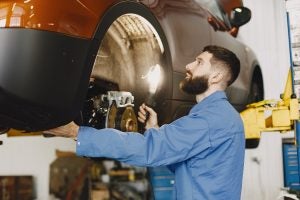
Man checking a car's brake pads near Indianapolis, IN

How Often Should You Replace Your Acura's Brake Pads?

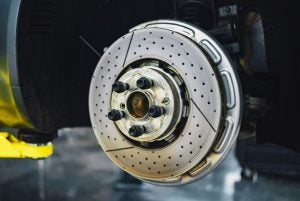
Every responsible car owner knows how important it is to make sure that the brake pads are in tip-top condition. But with replacements advised at between 30,000 and 70,000 miles, it can be challenging to find the balance. Here's our guide to help you decide when to contact your Acura dealer for a brake service. more When You Notice Signs of Trouble While many variables can affect the life of your pads, it's crucial to know the signs that they aren't functioning effectively. If you notice any of the following symptoms when you apply the brakes, it's important to schedule a replacement straight away: A low rumbling noise Screeching or squealing A vibrating brake pedal A soft or spongy brake pedal A brake pedal that feels too high or too low Sluggish response when using the brakes to decelerate Driving with worn brakes won't just put you and other road users in danger: it could also cause more costly damage to components in the braking system. The pads are designed to take on the strain to keep them fresh. If Your Driving Habits Cause Wear Some driving habits mean that pads will come under more pressure and wear out more quickly, so you'll need to replace them closer to the 30,000-mile mark. If you're prone to late or heavy braking, taking corners sharply, or "riding the brake," then consider a shorter interval between pad replacements. It's a better and safer driving practice to slow down in plenty of time and use engine braking where possible. If you're looking for ways to lengthen the lifetime of your braking components, try to stay mindful of how you're using your brakes. If the Roads Require a Lot of Braking Pads are a wearing part, so the more you use them, the sooner they'll need replacing. Some roads will require you to brake more often than others, so think about the routes that you take regularly. The braking system will wear out more quickly on roads with: Heavy traffic and stop-start driving Hilly roads with steep descents Roads with sharp turns and bends Mud, grit, or sand that causes corrosion Wet or icy roads that need heavier braking High temperatures that increase the heat of friction You will also have to brake with more force if you're slowing down a heavier load. If you regularly drive with a heavy trailer or payload, expect your brakes to need replacing more frequently. Taking all these variables into account should ensure that your brakes continue to function as your front-line safety system. But regular checkups every six months or timed to coincide with oil changes or tire rotations will guarantee that your pads are always in optimal shape. Schedule a service appointment at Ed Martin Acura for the confidence of knowing that your car is in the best hands. Image courtesy of Gustavo Fring via Pexels

Man working on a car bear Indianapolis, IN

Is Your Acura's Car AC Not Working? Visit Your Indianapolis Dealership Today

Everyone loves summer, but you may need relief from the heat. When your turn on your car AC, you expect to be greeted by cold gusts of air. Your car AC not working can make a great day unpleasant very quickly. Fortunately, your Acura dealer in Indianapolis, IN, can fix any AC problem for you. These are a few of the possible AC problems that we can fix for you. more Refrigerant Leak The AC depends on several different systems to convert hot outside air into refreshingly cold air. These systems all depend on refrigerant gas. This gas converts from gaseous to liquid states and back again as it cools the air in your cabin. The cooling system operates as a closed system, and refrigerant isn't consumed as your AC works. A lack of refrigerant means that your car has a refrigerant leak.   Refrigerant is odorless and colorless, and it can leak out as either liquid or gas, depending on what part of the system has developed a leak. Our technicians will test for the source of the leak by injecting a UV dye into the AC system. We use a special scanner to trace the passage of the refrigerant through the system. Once we find the leak, we'll repair it and refill the refrigerant. No Air From the AC When you turn on the AC, the airflow should start immediately. If you're getting no air movement through the vents, this suggests there's a blockage in the system.   The two possible blockage points are the air vent below your windshield and the AC ducts. If you hear the click of the compressor clutch when you switch on the AC, this means air is flowing into your car, so the blockage must be in the ducts. If you don't hear a click, your AC isn't receiving air and won't start. This would mean the outside vent is blocked by leaves, dirt, or other debris. Bad Smells From the Vents If your AC is blowing cold air, but the air smells damp or musty, your AC may have unwelcome interlopers. Most AC systems are only used in summer. The long periods when the AC isn't working can allow bacteria or mold to infest the AC system and the ducts. These organisms are drawn in the air that enters your AC system.   The AC system provides a perfect place for bacteria and mold, as its dark, cool, and contains tiny amounts of water. Our technicians can easily remove these organisms using a special antibacterial and anti-mold solution. Your cabin will smell pleasantly fresh again in no time. If you have any AC problem call us immediately at Ed Martin Acura. Image courtesy of Malte Luk via Pixabay

Contact Us

Fill out this form below and we'll contact you shortly
*Required Fields